As renewable energy adoption accelerates, energy storage systems have become indispensable for managing intermittency and ensuring a reliable power supply. In commercial and industrial (C&I) applications, two models are being developed in parallel: Standalone Energy Storage Systems (ESS) and Photovoltaic-Coupled Storage (PV+ESS).
Both approaches play a vital role in the energy transition, yet they differ in benefits, economics, and application scenarios.
Standalone ESS: A Flexible & Reliable Solution
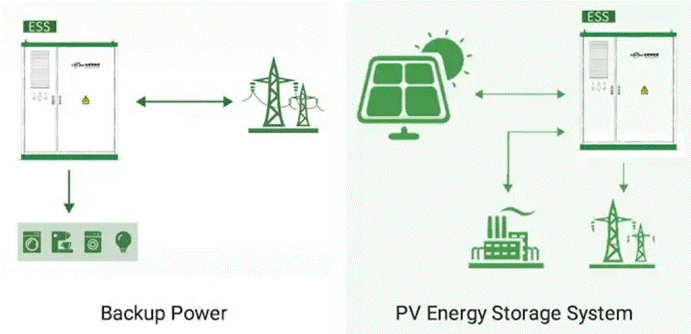
A Standalone ESS refers to storage facilities not directly paired with renewable generation. These systems draw electricity from the grid and discharge it strategically to optimize consumption. Compared with PV+ESS, standalone systems emphasize flexibility and independence, making them highly adaptable across use cases.
Key Advantages:
– Peak Shaving & Demand Charge Reduction – By charging during off-peak hours and discharging during peak demand, standalone ESS smooths load curves and helps reduce costly demand charges in C&I sectors.
– Backup Power – In critical facilities such as hospitals or factories, standalone ESS ensures continuity by seamlessly taking over during grid outages.
– Grid Flexibility – In some markets, ESS can participate in demand response, frequency regulation, or capacity markets, contributing to grid stability while generating additional revenue streams.
– Deployment Flexibility – Since it is not tied to PV generation, standalone ESS can be deployed in any location or scale, making it suitable for sites with limited roof space or poor solar conditions.
Limitations:
– Lack of Clean Energy Input – As a standalone ESS typically sources electricity directly from the grid, its decarbonization value depends on the local generation mix.
– Economics Tied to Market Design – Returns rely heavily on tariff structures such as peak/off-peak pricing, demand charges, or ancillary service participation. In markets without such mechanisms, payback can be prolonged.
PV+ESS: Sustainable Cost Optimization
PV+ESS has emerged as one of the fastest-growing models worldwide. By coupling solar generation with storage, businesses create a closed-loop system of clean generation, storage, and local consumption, unlocking a broader set of values.
Key Advantages:
– Higher Self-Consumption – Excess solar generation can be stored during the day and consumed at night or on cloudy days, reducing grid reliance and improving energy independence.
– Lower Energy Costs – Solar power offers some of the lowest levelized costs of electricity (LCOE), especially in high-irradiance regions like Australia and the Middle East. Combined with storage for peak shaving, it maximizes solar utilization and reduces long-term energy bills.
– Enhanced Resilience – In markets with volatile electricity prices or weak grid reliability, PV+ESS ensures both supply stability and cost certainty.
– Policy Incentives – Governments worldwide encourage solar+storage deployment. The U.S. Investment Tax Credit (ITC) is being extended to standalone and coupled storage, while Australia and Europe provide subsidies and market incentives.
Limitations:
– Higher Upfront CAPEX – PV+ESS requires investment in solar arrays, inverters, and integrated control systems, raising initial costs compared to standalone ESS.
– Complex System Integration – Effective coordination between solar generation and storage is essential to avoid efficiency losses and battery degradation, placing higher demands on design and O&M.
In Brief
Standalone ESS is primarily about power security and flexibility, making it well-suited for backup applications or demand-side cost optimization. PV+ESS, on the other hand, is about sustainability and long-term economics, appealing to businesses aiming to reduce bills, increase renewable consumption, and achieve energy independence.
Looking ahead, grid-forming ESS & PV + ESS are emerging as the next frontier. Unlike traditional grid-following inverters, grid-forming systems can establish and regulate voltage and frequency autonomously. This makes them invaluable in weak-grid, high-renewable, or islanded scenarios—transitioning storage from a cost-management tool into critical infrastructure for future grid stability.
As electricity markets and regulatory frameworks evolve, the choice is no longer a binary Standalone ESS vs. PV+ESS. The future lies in combining their strengths—while investing early in grid-forming capabilities—to build an energy landscape that is both reliable and sustainable.
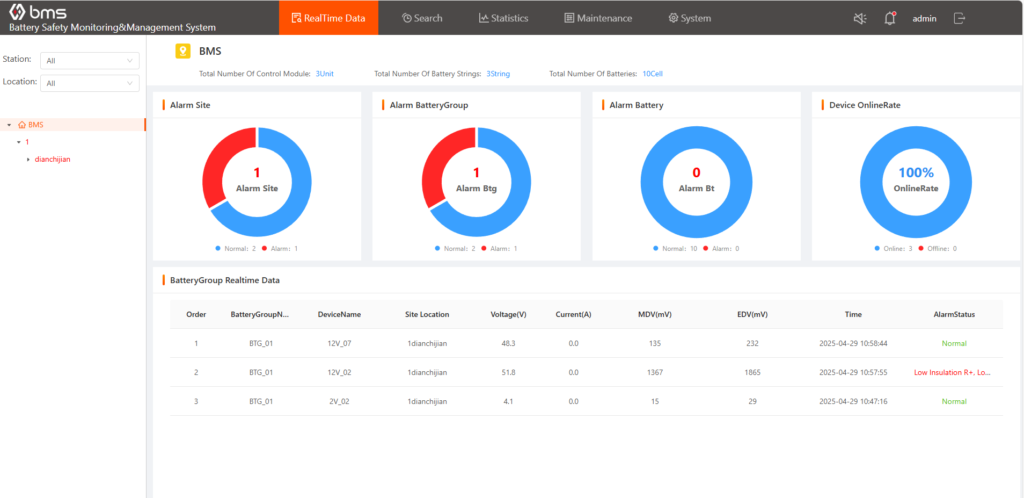
Apply a demo of Gerchamp’s Cloud Platform
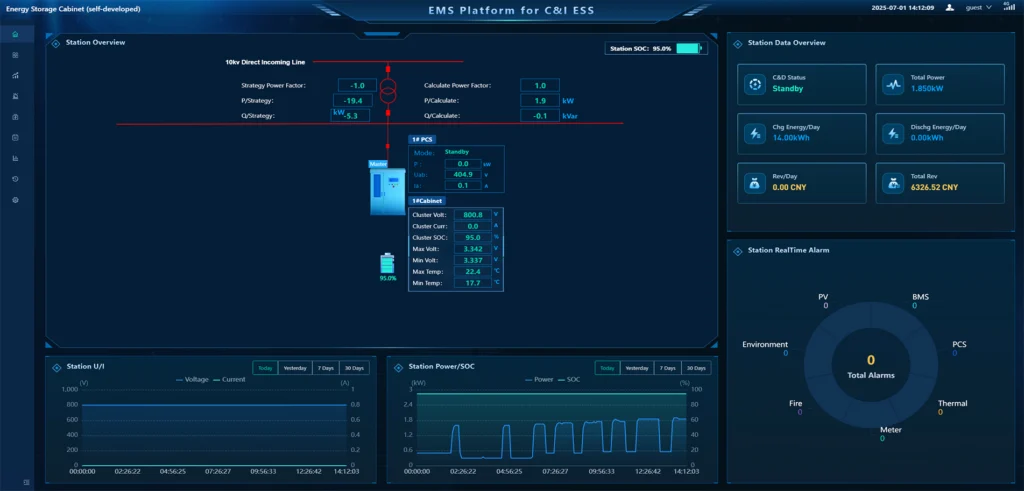
Apply a demo of Gerchamp’s Cloud Platform
 Gerchamp