Nickel-Zinc Batteries,Fire Safety Revolution in Data Centers

Nickel-Zinc Batteries,Fire Safety Revolution in Data Centers What item in a data center can cause a fire? The answer is batteries. In a data center, the most concentrated and critical application scenario for batteries is the UPS (Uninterruptible Power Supply) . The UPS acts as the data center's "last line of defense": when utility power fails, the UPS immediately takes over, providing precious buffer time for servers until backup generators start and stabilize. Without a UPS, even a brief voltage fluctuation could cause large-scale outages, data loss, or even hardware damage. For Better UPS Performance, the Industry Turns to Lithium

A New Perspective on Cost Reduction in Data Centers

A New Perspective on Cost Reduction in Data Centers How Much Does it Cost to Build a Data Center? Data center construction is a highly complex and capital-intensive field. With the explosive growth in computing power demand, how to rapidly and safely expand data center capacity without losing control of costs has become a focal point for the industry. Generally speaking, the cost of building a data center ranges from $600 to $1,100 per square foot, or $7 million to $12 million per megawatt of IT load. For example, constructing a 700,000-square-foot, 60-megawatt data center in Northern Virginia, USA, can

When AI Workloads Redefine Power Demand, UPS Must Evolve

When AI Workloads Redefine Power Demand, UPS Must Evolve Artificial intelligence is not just changing how we compute — it is fundamentally reshaping how electricity is consumed. A single ChatGPT query consumes approximately 2.9 Wh of electricity, compared with 0.3 Wh for a traditional Google search. This nearly ten-fold increase may appear marginal in isolation, but at global scale — across billions of queries — it becomes a structural load challenge for power systems. The implication is clear: AI is turning data centers into high-frequency, high-volatility power consumers — and existing grid infrastructure was never designed for this behavior. In

Gerchamp Solutions for Critical Power
Gerchamp Solutions for Critical Power Safe, durable, and monitored solution for oil & gas In the oil and petrochemical industry, safety and efficiency remain core challenges. Harsh operating environments, potential explosion risks, and the unpredictability of critical equipment batteries can all lead to severe safety incidents and costly unplanned downtime losses. Traditional backup battery solutions often fall short in reliability, safety, and full lifecycle management. Addressing these pain points, we provide professional battery safety and performance solutions tailored for the oil and gas sector. Our explosion-proof battery monitoring system delivers real-time safety protection for hazardous areas, nickel-zinc batteries provide sustained

Intrinsic Safety Is No Longer a Specification — It’s a Strategic Requirement in Middle Eastern Oil & Gas

Intrinsic Safety Is No Longer a Specification — It’s a Strategic Requirement in Middle Eastern Oil & Gas The latest industry analysis indicates that the global oil and gas backup power system market is poised for explosive growth in the coming years. As the world's most critical hub for oil and gas production and processing (encompassing countries like Saudi Arabia, the UAE, Kuwait, and Qatar), the Middle East has stringent requirements for power supply stability. Together with Africa, the region is projected to account for approximately 36% of the global market share. Currently, the oil and gas industry is not

Guarding Battery Safety: Gerchamp BMS’s Smart Choice

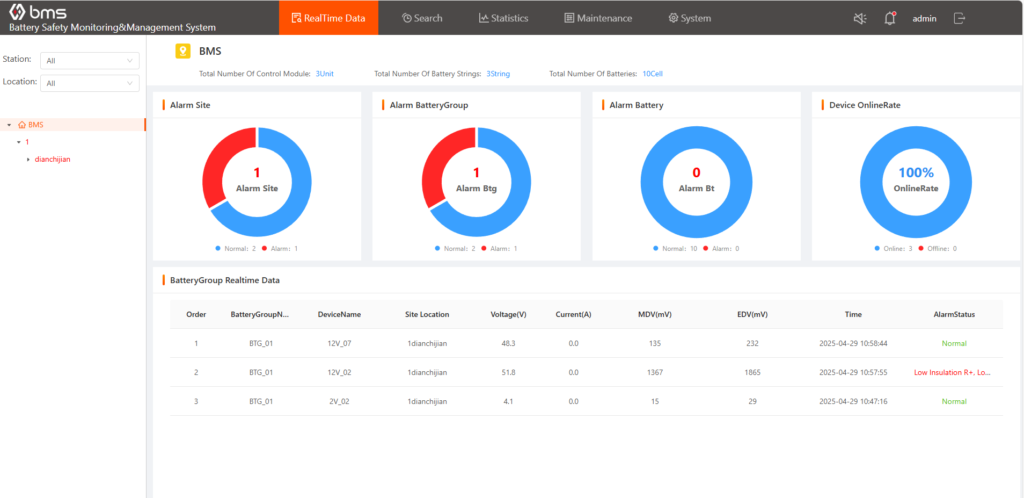
Guarding Battery Safety: Gerchamp BMS's Smart Choice With global electricity consumption on the rise, reliable battery management systems (BMS) are essential for ensuring stable performance and safe operation in energy storage systems or critical backup scenarios — such as AIDC, oil and petrochemical industries, financial services. Amid the market's abundance of BMS options, how can you identify a solution that truly aligns with battery characteristics while comprehensively safeguarding system safety? Today, we explore how Gerchamp BMS leverages technological innovation and systematic thinking to provide robust protection for your battery applications through key dimensions. Real-time monitoring eliminates security gaps. While periodic manual

End-of-Life Management Matters More Than Ever

End-of-Life Management Matters More Than Ever As global deployment of backup energy solutions accelerates — particularly in critical sectors like data centers for UPS and backup power systems — the industry is entering a new phase. Merely pursuing performance is no longer sufficient. What happens at end-of-life? Lifecycle termination management is emerging as one of the most critical sustainability challenges in the energy transition. Materials sourcing, manufacturing intensity, recyclability, and environmental recovery pathways now directly influence regulatory approval, ESG scoring, insurance risk assessment, and long-term total cost of ownership. In many conventional battery chemistries, end-of-life processing remains complex, energy-intensive, or

How BMS can help the key areas say goodbye to Power outages

How BMS can help the key areas say goodbye to Power outages Power outages are not just an inconvenience in critical sectors such as data centers, telecom networks, hospitals, and financial institutions — they represent a direct operational and financial risk. Even a brief loss of power can result in data loss, service disruption, equipment damage, and significant economic impact. To prevent these consequences, backup power systems are deployed as a fundamental layer of protection. At the heart of these systems are backup batteries, designed to deliver instant power during grid disturbances and bridge the gap until secondary power sources

Grid dependence and energy control rules for businesses in energy transition

Grid dependence and energy control: rules for businesses in energy transition With more than USD 2.2 trillion expected to be invested in renewables, nuclear, grids, storage, electrification, and low-emissions technologies in 2025, electricity has become the backbone of the global energy transition. This shift is not ideological — it is economic. Electricity is now the fastest-growing form of final energy, driven by data centers, AI workloads, electrification of transport and heating, advanced manufacturing, and the digitalization of nearly every industry. Electricity demand is growing more continuous, centralized, and mission-critical, while power grids face overload risks, higher vulnerability, and forecasting uncertainty.

Right selection of backup batteries is a key factor in maintaining AIDC operation

Right selection of backup batteries is a key factor in maintaining AIDC operation As digital infrastructure expands globally, especially in regions with fast-growing data center capacity and harsh environmental conditions, tolerance for power instability continues to shrink. Higher rack densities, AI workloads, and always-on services mean that electrical systems are operating closer to their limits than ever before. However, AIDC differs from conventional data centers, as the operational patterns of AI workloads are entirely distinct from any scenario data centers have encountered before. GPU clusters no longer maintain stable power supply but instead exhibit dramatic fluctuations — loads can surge

Power and Land Constraints Are Redefining Data Center Growth

Power and Land Constraints Are Redefining Data Center Growth The data center market is becoming increasingly constrained by two critical resources: power and land. Demand for data center capacity continues to outpace supply, with rack space and power capacity in major hubs being absorbed as soon as it becomes available. Vacancy rates across leading markets have fallen to historic lows, reflecting a tightening global supply-demand balance. In the United States, Northern Virginia remains the world’s largest data center hub, yet its vacancy rate in 2025 has dropped to just 0.7%, effectively a fully leased market. Atlanta, which had close to

Why Grid Power Alone Is No Longer Enough for Business Continuity?

Why Grid Power Alone Is No Longer Enough for Business Continuity? Industry Trend With the accelerated global electrification process and the rapid expansion of high-energy-consuming infrastructure for commercial and industrial workloads, global electricity consumption is projected to increase 2-3 times in the coming decades, with electricity becoming the largest component of energy demand. Challenges of Power Grid Reliability This growth is not without consequence. The North American Electric Reliability Corporation (NERC) and industry assessments indicate that the pace at which large electrical loads are being added is outstripping the development of grid generation and transmission infrastructure, heightening concerns about system
1 2 3 11