The answer is batteries.
In a data center, the most concentrated and critical application scenario for batteries is the UPS (Uninterruptible Power Supply) . The UPS acts as the data center’s “last line of defense”: when utility power fails, the UPS immediately takes over, providing precious buffer time for servers until backup generators start and stabilize. Without a UPS, even a brief voltage fluctuation could cause large-scale outages, data loss, or even hardware damage.
For Better UPS Performance, the Industry Turns to Lithium Batteries
Traditional UPS systems mostly used lead-acid batteries, but they suffer from low energy density, large footprints, and limited lifespans. As computing density increases, data center demands on UPS systems have also risen. Lithium-ion batteries, with their high energy density, excellent charge/discharge efficiency, and long life, are rapidly replacing lead-acid batteries and becoming the choice for many data centers.
However, the problem is that lithium batteries are more prone to catching fire.
The thermal runaway risk of lithium-ion batteries is well-known—once an internal short circuit, overcharging, or overheating occurs, the battery can ignite violently or even explode. This means that while UPS performance has improved, the fire hazard within data centers has also intensified.
The core goal of data center fire protection strategies is protecting property and ensuring operational continuity. But how this goal is achieved has continuously evolved as data centers themselves have changed.
Not long ago, most data centers used clean agent fire suppression systems, as these gases are non-conductive and won’t damage sensitive equipment, making them seem safer than water. However, gas systems become less effective in large, spacious areas—and as data halls have grown to enormous sizes, pre-action sprinkler systems gradually became the mainstream protection solution.
But the situation might be changing again.
With the cost of core equipment like GPUs soaring to millions of dollars per server, engineers are noticing new facilities returning to gas-based systems. Others are even exploring water mist systems, which use tiny droplets that are safer for electronic equipment than traditional sprinklers.
Another major shift is occurring: to give every rack its own UPS, lithium batteries are now being distributed throughout the facility (previously, they were centralized in a dedicated battery room). Data center owners, battery manufacturers, and many fire protection engineers who have reviewed test data believe that distributing batteries offers significant fire safety advantages:
However, fire test data proving this hypothesis is difficult to obtain—many companies are unwilling to share it. Whether distributed layouts are truly safer remains an unverified assumption lacking public validation.
Faced with the fire hazards of lithium batteries and the continuous evolution of data center fire protection strategies, a more fundamental solution is emerging: eliminate the risk at its source by adopting nickel-zinc batteries.
This means that data centers using nickel-zinc batteries no longer need to constantly between “gas or water” or “centralized or distributed” — the risk itself simply doesn’t exist.
Data center fire protection strategies are undergoing a profound transformation. From gas to water, from centralized to distributed, each adjustment represents a rebalancing of risk and cost. But perhaps the most complete solution isn’t making fire suppression systems more complex; it’s making the source of risk inherently safer. Gerchamp Nickel-zinc battery represent precisely such a choice, addressing the problem at its origin.
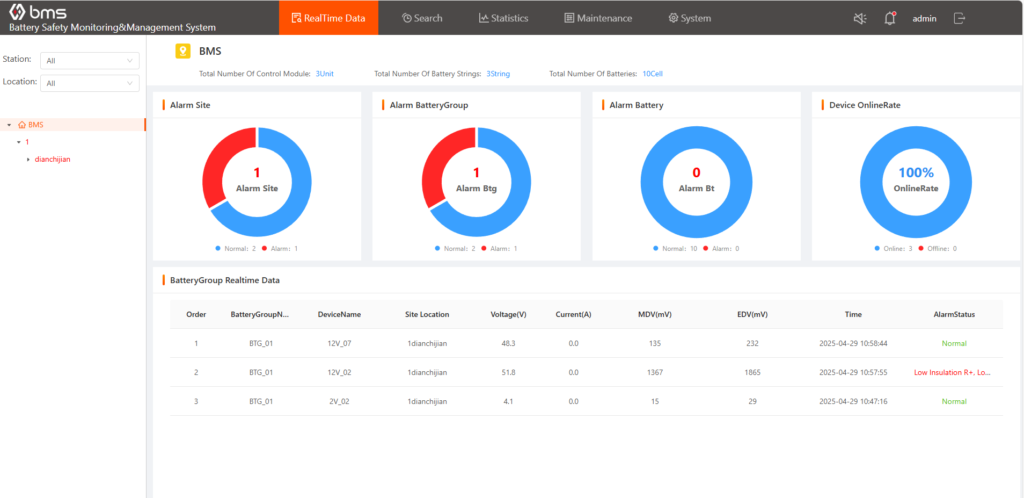
Apply a demo of Gerchamp’s Cloud Platform
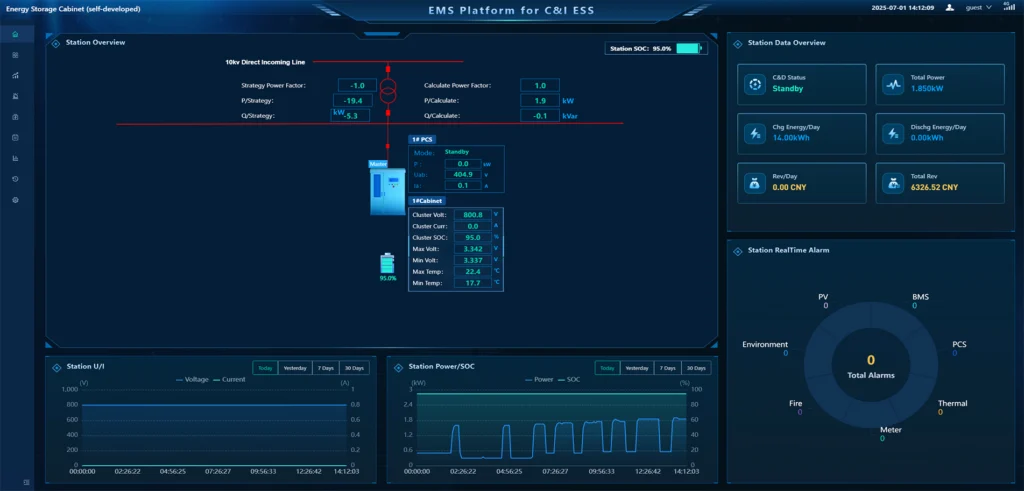
Apply a demo of Gerchamp’s Cloud Platform
 Gerchamp