In hyperscale data centers that require extremely high reliability, it is very inadequate to judge the quality of UPS batteries by simply taking the voltage. Relying solely on voltage readings is deceptive, as it tends to mask the real chemical decay inside the battery. A complete battery health assessment must follow a “three-level diagnostic protocol”.
Firstly, conduct a meticulous appearance inspection to see if the case is bulging, or if the terminals are leaking or corroded. Secondly, use a professional tester to accurately measure the internal resistance (IR), because for VRLA batteries, an increase of 20-25% of the internal resistance over the reference value is the most reliable early warning signal for SOH decline. Thirdly, perform a controlled discharge test or load test. During a simulated power failure, verify that the actual capacity of the battery meets the nominal value. For infrastructure seeking high availability, the kind of manual “snapshot” testing done once or twice a year is not only time-consuming, but also extremely risky. Now the industry’s gold standard has shifted to automated Battery Monitoring Systems (BMS), which completely detect the risk of “hidden failures” that are often missed by ordinary UPS self-test cycles by monitoring SOC and ohmic values in real time.

Although it may not sound technical, physical inspection is indeed the first critical step in figuring out the condition of UPS batteries. In the eyes of senior facility managers, this is actually identifying the physical manifestations of chemical stress:
Voltage readings are often only “surface” data, and the voltage may appear to be stable until the battery is almost completely dead. To truly assess state of health (SOH), we must measure internal resistance.
In VRLA (valve-regulated sealed lead-acid battery), the internal resistance will gradually increase as the battery ages, the plates are sulfated or the electrolyte dries up.
The third level of checking UPS battery condition is a load test. This is the only means of verifying whether the battery can really achieve its nominal performance.
The kind of manual “snapshot” inspection once or twice a year actually has a huge vacuum in safety protection. In a high-availability environment like the one served by Gerchamp, these “hidden failures” are likely to erupt between inspections.
The current industry trend is a full shift to automated Battery Monitoring Systems (BMS). Unlike the standard UPS self-test cycle, a professional BMS can provide:
By integrating a specialized Battery Monitoring System, data center managers are able to move from “firefighting” maintenance to a “predictive” model. In this way, checking the status of a UPS battery is no longer a regular headache, but a precise task automatically completed by the system 24/7/365.
Author: Kevin
I am a Senior Engineer at Gerchamp’s BMS R&D Department with over 12 years of industry experience. I specialize in leading the architecture design and core algorithm development for our advanced Battery Management Systems.
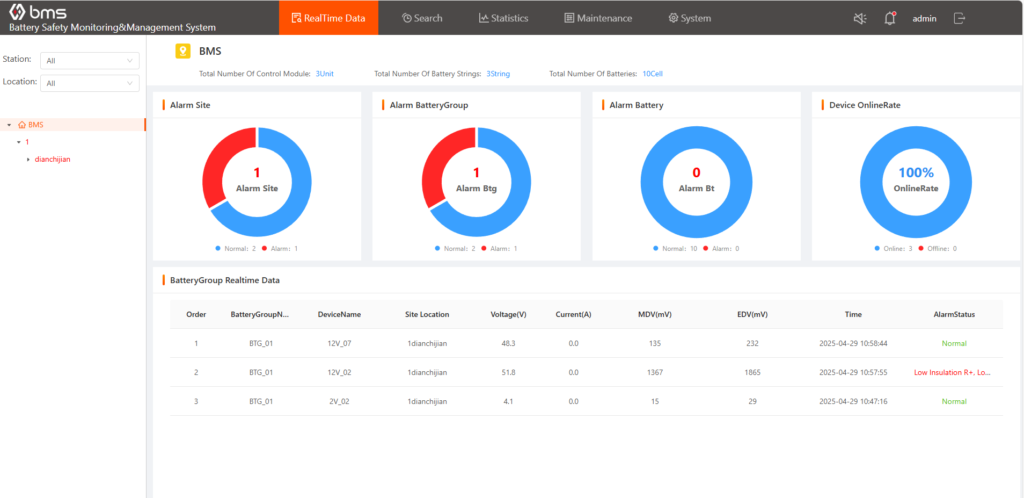
Apply a demo of Gerchamp’s Cloud Platform
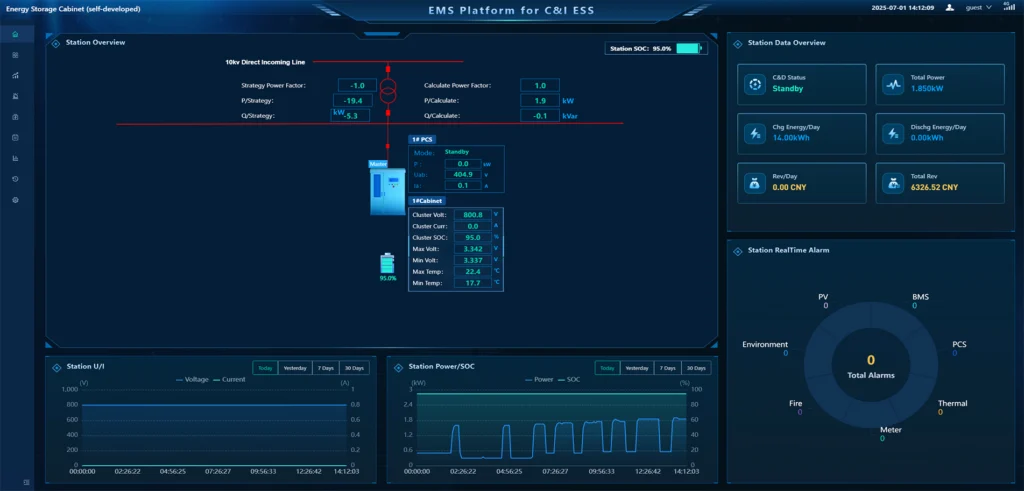
Apply a demo of Gerchamp’s Cloud Platform
 Gerchamp