The answer is yes, a BMS is definitely a necessity. For commercial energy storage systems (ESS) and data center UPS infrastructure, BMS has never been optional, but a key “digital immune system” to prevent catastrophic thermal runaway and fire . Without it, both lithium batteries and lead-acid batteries are extremely vulnerable to the fatal blow of overcharge, overdischarge and short circuit, resulting in rapid battery decay and even irreversible damage.
By performing accurate active cell balancing and continuously monitoring SOC (state of charge) and SOH (state of health) in the background, a set of industrial BMS can directly run through predictive maintenance, save you high manual inspection costs, and finally cover the long-term safety, compliance and return on investment (ROI) of your battery assets.

When discussing whether BMS is needed or not, facility managers and engineers have to look at the huge scale of the current power system. In commercial energy storage systems (ESS) and data center UPS architectures, batteries are the core asset that has cost a lot of money and the last line of defense against system downtime. In this extremely low fault-tolerant environment, industrial-grade BMS actually acts as a digital immune system for the entire battery network.
In professional engineering, this “immune system” consists of two synergistic layers: Monitoring and Management. For critical backup power in data centers utilizing traditional lead-acid or advanced nickel-zinc batteries, a precise Battery Monitoring System (BMS) acts as the diagnostic radar. It continuously tracks the micro-environment, voltage, and internal resistance of each block. For highly dynamic commercial Energy Storage Systems (ESS) using high-density lithium batteries, an active Battery Management System (BMS) steps in to directly control charging, discharging, and thermal behaviors. Whether it is hyper-accurate monitoring or active management, their core mission is the same: to intercept the worst-case scenario—catastrophic thermal runaway and devastating fires.
Whether your base is a high-energy density lithium battery or a traditional lead-acid battery, they have common weaknesses in electrochemical characteristics. Without BMS protection, these batteries are completely exposed and unprotected and are completely exposed to the pressure of the environment and operation. The reason why BMS is indispensable is mainly because it can intercept the three critical threats:
By signalling these abnormal conditions, BMS can prevent the battery from being scrapped in advance and keep the whole system in a safe operation range.
To truly understand why a BMS is essential, we must look at how it maximizes battery performance. Industrial battery strings are often composed of hundreds of individual cells or blocks. Over time, natural consistency deviations will occur among them. Advanced management systems solve this problem through chemistry-specific cell equalization.
For energy-dense lithium batteries, the BMS performs precise active balancing, actively transferring energy from high-voltage (strong) cells to low-voltage (weak) ones. For traditional lead-acid or advanced nickel-zinc batteries, the system applies targeted voltage equalization and continuous monitoring. Regardless of the battery type, this operation ensures that the weakest cell is not allowed to drag down the performance of the entire pack. It not only pushes the usable capacity of the ESS or UPS to its limit but also significantly extends the overall lifespan of the battery assets.
In addition, the BMS continuously tracks and calculates two critical parameters in real time:
Ultimately, the decision to invest in a BMS comes down to the final word is economic accounting and safety compliance. In the early years, the maintenance of that large battery pack was all manual on-site inspection, which was extremely costly and time-consuming. Technicians have to take instruments one by one to measure the individual cells, which is costly and highly prone to human error.
Now, an industrial BMS completely eliminates these expensive labor costs. With continuously rolling SOC and SOH data, facility managers can switch their work mode from “repair if broken” to “predictive maintenance”. I often demonstrate to customers in projects that with this data, a battery will fail in a few weeks or months, you can know it now and replace it in advance.
Moreover, the safety and environmental regulations of commercial energy storage are becoming more and more strict. A reliable BMS will automatically record all operating data and intercept dangerous actions, allowing you to properly comply with those complex international safety standards. Looking at extreme safety protection, zero manual inspection costs, and greatly extended battery life, BMS is actually the ultimate guarantor of the return on investment (ROI) of your battery assets. If you still care about the security, operational efficiency and ultimate profitability of your energy storage infrastructure, there’s no question about it: you have to get it.
Author: Kevin
I am a Senior Engineer at Gerchamp’s BMS R&D Department with over 12 years of industry experience. I specialize in leading the architecture design and core algorithm development for our advanced Battery Management Systems.
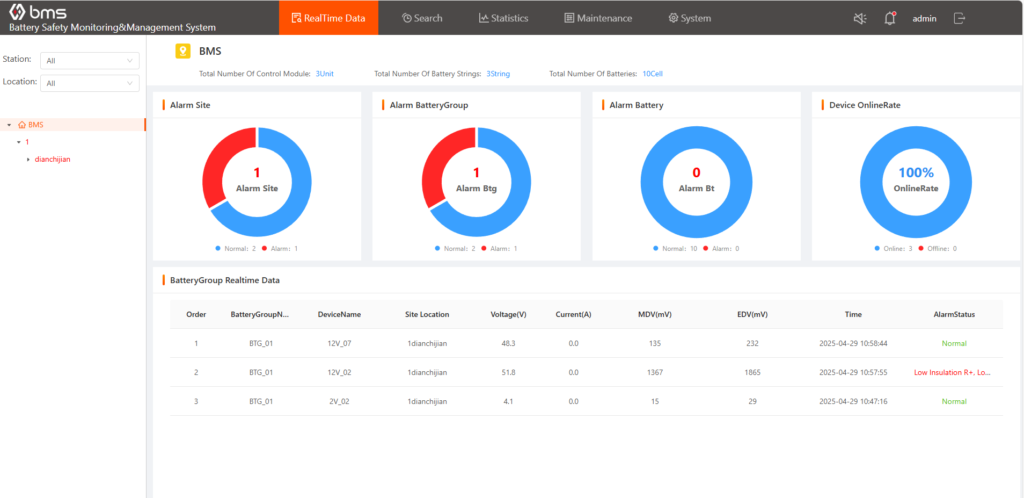
Apply a demo of Gerchamp’s Cloud Platform
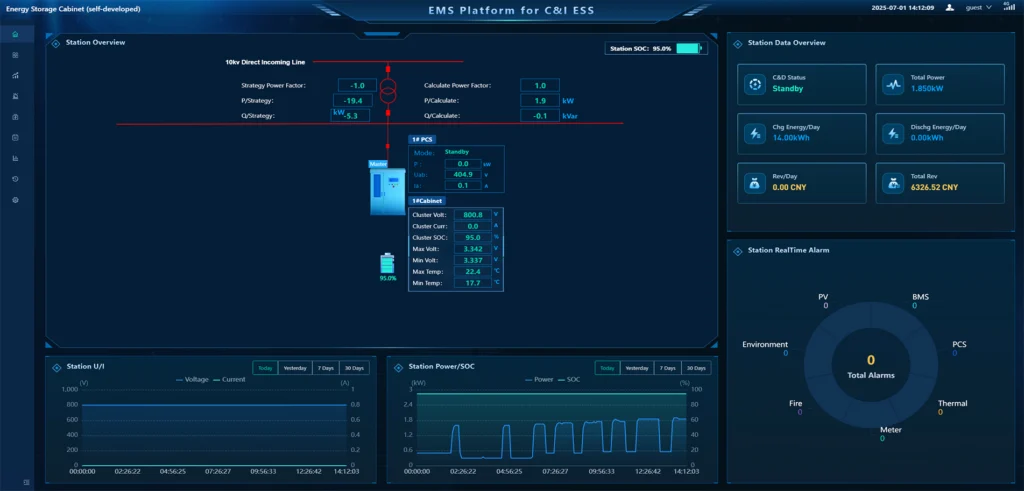
Apply a demo of Gerchamp’s Cloud Platform
 Gerchamp