The rapid rollout of 5G networks, coupled with the explosive growth of edge computing, has essentially reshaped the fundamental architecture of the entire communications infrastructure. Today’s 5G base stations consume far more power than their 4G predecessors, placing unprecedented strain on the power supply systems within communication cabinets.
In this new era, the traditional way of “communication power supply” – that is, relying on an array of bulky old battery packs, which can only maintain a float voltage idly and lack deep monitoring—has long been impractical. Because you have no way of accurately determining the battery’s true health, this blind spot often leads directly to sudden network outages. Not to mention that relying solely on manual on-site inspections drives operating costs up significantly.
Today, true communication power solutions require a fundamental shift in thinking. Operators need to adopt a complete global architecture that integrates intrinsically safe battery management, high-precision Battery Monitoring Systems (BMS), and centralized management in the cloud. By integrating these cutting-edge components, you are building a “digital immune system” for your critical infrastructure. Next, let’s talk about how advanced power management solves the most difficult problems in the current communications industry.
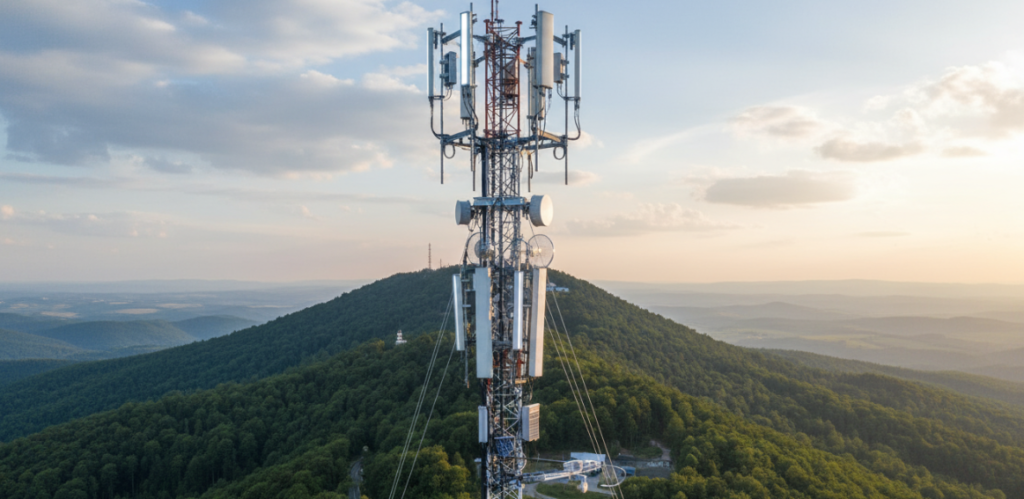
The space, load-bearing, and fire-fighting requirements of macro stations or roof base stations in cities are very strict. Evaluating the energy storage medium and its management system is the most critical first step in any communication power supply scheme.
Whether your infrastructure strategy relies on traditional lead-acid batteries or high-density lithium batteries, safety and performance management must not be compromised. To guarantee system stability, you need a specialized Battery Management System adjusted specifically for the communication standby power scene. Modern BMS solutions can achieve accurate cell-level equalization, high-accuracy SOC/SOH (State of Charge / State of Health) estimation, and extremely strict overcharge protection. Real-time monitoring and early fault detection are the only ways to ensure that your battery assets deliver their maximum return on investment (ROI) with absolute safety, completely preventing the risks of thermal runaway or performance degradation.
To upgrade the power system across thousands of remote or old base stations, logistics scheduling is absolutely a major challenge. The deployment of monitoring systems often gets stuck in crowded and narrow cabinets, which is time-consuming and error-prone. Today’s innovative solutions rely on a flexible, highly accurate, and well-deployed architecture to overcome this hurdle:
Now that base stations are evolving towards decentralized edge data centers, the matching power system naturally has to keep up. The modern communication power supply scheme is changing from purely passive “standby” to active Energy Storage Systems (ESS) that can participate in peak-shaving, valley-filling, and grid interaction.
In order to catch up with this trend, large-capacity ESS BMS schemes are now designed to directly support the high-voltage, large-scale energy storage arrays of major communication switching centers. In addition, if the site area is large enough, operators can utilize scalable Commercial and Industrial (C&I) energy storage systems. The financial logic is highly beneficial: charge the batteries at night when the electricity price is cheap, and discharge them during the day at peak rates. This strategic shift directly turns a traditional cost center into an active asset that actually saves money.
Whether a power supply scheme works or not depends largely on how much visibility it provides. Operators manage an overwhelming number of networks. If they still rely on passive maintenance—waiting for something to break before repairing it, or sending technicians to the scene regularly for manual tests—operational budgets will eventually collapse.
The brains of modern communication power solutions actually reside in the cloud. Advanced cloud management platforms and full-lifecycle asset management software (like DCIM) can capture real-time data from all BMS across the entire network. As long as the facility manager monitors an intuitive, unified dashboard, they can manage hundreds of sites simultaneously. By keeping a close eye on power health and energy consumption, the system can automatically trigger alarms and analyze thermal runaway trends well before a critical failure occurs—empowering operators to transition from reactive maintenance to proactive prevention.
The communication network is too critical to rely on patchwork and outdated power hardware. A hard-core communication power supply scheme must seamlessly integrate reliable battery monitoring technology, streamlined deployment, and enterprise-class cloud analytics.
Under the broad direction of driving infrastructure to become safer, greener, and smarter, we must optimize existing communication networks with a comprehensive software and hardware ecosystem. Whether you’re busy upgrading a 5G site on the roof or building an oversized edge data center, smart power management is the guarantee to keep your network online reliable.
Author: Kevin
I am a Senior Engineer at Gerchamp’s BMS R&D Department with over 12 years of industry experience. I specialize in leading the architecture design and core algorithm development for our advanced Battery Management Systems.
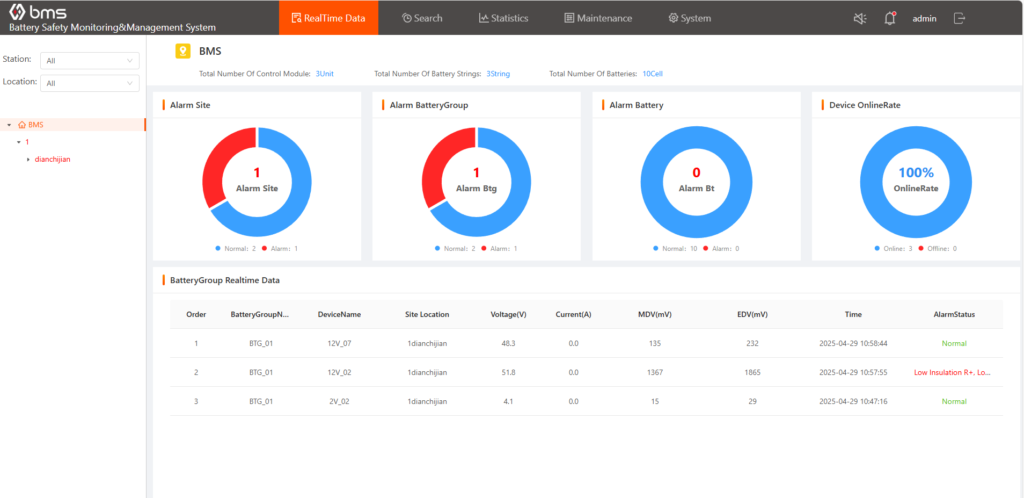
Apply a demo of Gerchamp’s Cloud Platform
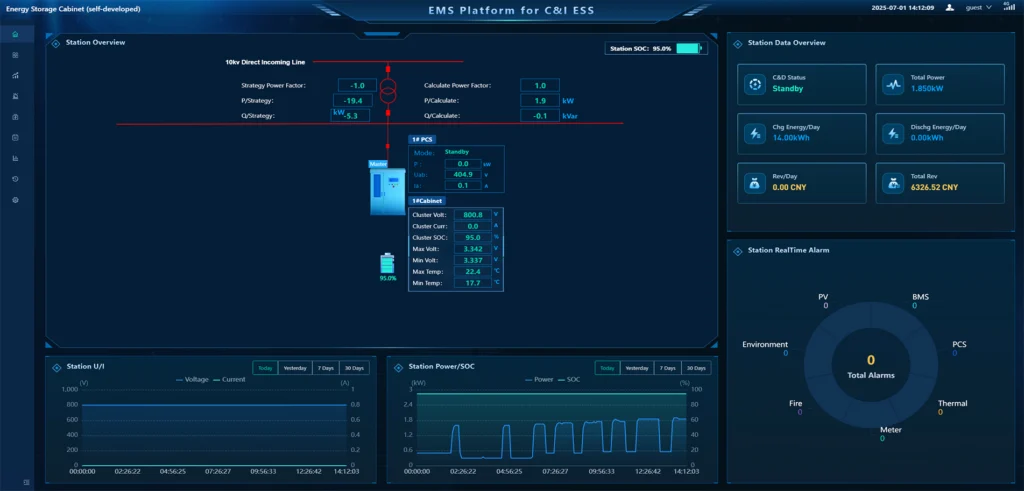
Apply a demo of Gerchamp’s Cloud Platform
 Gerchamp