Every data center needs a UPS battery. When the grid fails, even for a few seconds, that battery is the only thing standing between normal operation and a costly shutdown. But not all UPS batteries are the same. The chemistry inside the battery box determines how safe, how reliable, and how expensive your backup power really is.
If you are managing a data center, a colocation facility, or any mission‑critical environment, you have likely heard about three main UPS battery types: sealed lead‑acid (SLA), lithium‑ion (Li‑ion), and nickel‑zinc (NiZn). But which one actually keeps your data center running safely?
For data center UPS applications, there three chemistries are commercially relevant today. Here is a quick overview before we dive into details.
| UPS Battery Type | Upfront Cost | Lifespan | Thermal Runaway Risk | Power Density |
| Sealed Lead‑Acid (SLA) | Low | 3–5 years | Yes (slow) | Low |
| Lithium‑ion (Li‑ion) | High | 10–15 years | Yes (violent) | High |
| Nickel‑Zinc (NiZn) | Medium | 10–15 years | No | High |
Many people assume a sealed lead-acid UPS battery is safe because it has been used for decades. That assumption is wrong.
An SLA UPS battery can go into thermal runaway. This happens most often during overcharging. The battery heats up, internal pressure rises, and the pressure relief valve opens. It releases hydrogen and oxygen gas both flammable. If a spark occurs, the gas ignites.
The process is slow, sometimes taking hours. But slow does not mean safe. A thermal runaway event in an SLA UPS battery can:
Data center operators often ignore SLA risks because the failure is not explosive. Yet any fire or gas release in a server room is a disaster. An SLA UPS battery does not need a violent explosion to destroy equipment or endanger staff.
Key takeaway: An SLA UPS battery is not safe. It has a real, documented thermal runaway risk just slower than lithium.
Lithium-ion UPS battery systems offer long life and high power density. But safety is their achilles’ heel.
A lithium-ion UPS battery is prone to violent thermal runaway. One defective cell from overcharge, internal short, manufacturing flaw, or physical damage can enter a self-heating state. Temperatures rise to over 500°C within seconds. The cell vents flammable electrolyte vapor. Then it ignites.
The result is a jet flame that spreads to neighboring cells. A lithium-ion UPS battery fire is:
To reduce the risk, a lithium-ion UPS battery needs:
None of these eliminate the risk entirely. Lithium-ion UPS battery fires have destroyed data centers, grounded flights, and caused millions in damages. The battery becomes the very fire hazard it was supposed to guard against.
Key takeaway: A lithium-ion UPS battery is not safe for data centers without extreme, expensive precautions and even then, risk remains.
Nickel-zinc (NiZn) is the only UPS battery chemistry that has never recorded a thermal runaway event. It combines the inherent safety of aqueous chemistry with high performance.
A NiZn UPS battery uses a water-based electrolyte that is non-flammable. The chemical reactions inside a NiZn cell do not produce a self-heating runaway condition. Even under severe abuse overcharge, short circuit, physical puncture the cell will not enter thermal runaway.
Independent tests confirm that a NiZn UPS battery:
For a facility manager, this means:
A NiZn UPS battery is the only chemistry that truly eliminates thermal runaway as a failure mode. It keeps your data center safe without compromise. Gerchamp’s nickel-zinc battery has also passed the UL9540a certification test, providing enhanced safety assurance.
Beyond zero thermal runaway, a NiZn UPS battery offers:
Key takeaway: A NiZn UPS battery is the safe choice for any mission-critical environment.
If safety is your priority, the answer is clear.
An SLA UPS battery has a hidden thermal runaway risk. It releases flammable gas and corrosive vapor. Failure is slow but real.
A lithium-ion UPS battery offers high performance but introduces extreme fire danger. Even with expensive mitigation, the risk of a violent, hard-to-extinguish fire remains.
A NiZn UPS battery is the only chemistry with zero risk of thermal runaway. It cannot catch fire, release flammable gas, or self-heat. For data centers where downtime and fire are not options, NiZn is the safest UPS battery you can choose.
Stop compromising on safety. Choose the UPS battery that keeps your facility running – without the fire risk.
Author:Xu
I am an Energy Storage Technology Expert at the Gerchamp Technology Research Institute. With a focus on next-generation storage technologies and strategic patent layouts, I lead our team’s exploration into the future of energy. I draw on this technical R&D background to provide deep, accurate insights into how energy storage systems operate and evolve. “our team’s exploration into the future of energy. I draw on this technical R&D background to provide deep, accurate insights into how energy storage systems operate and evolve.
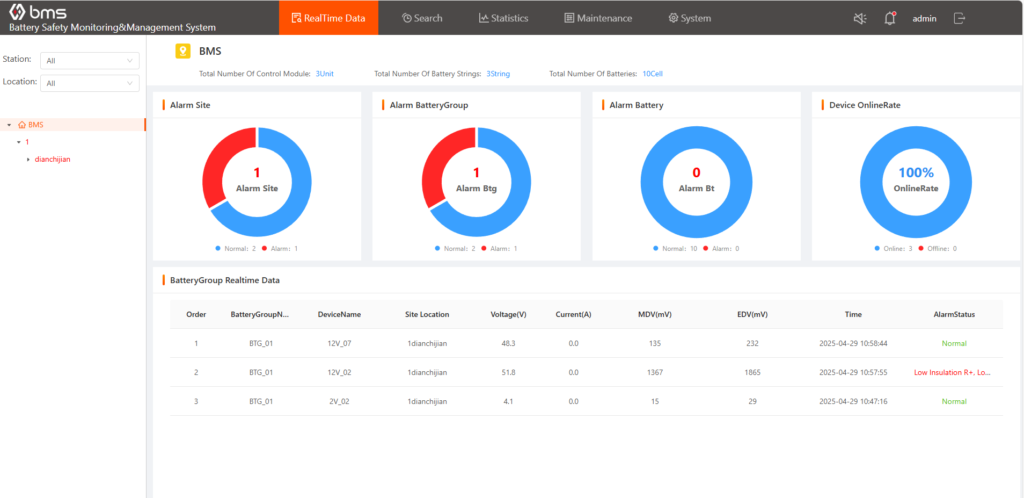
Apply a demo of Gerchamp’s Cloud Platform
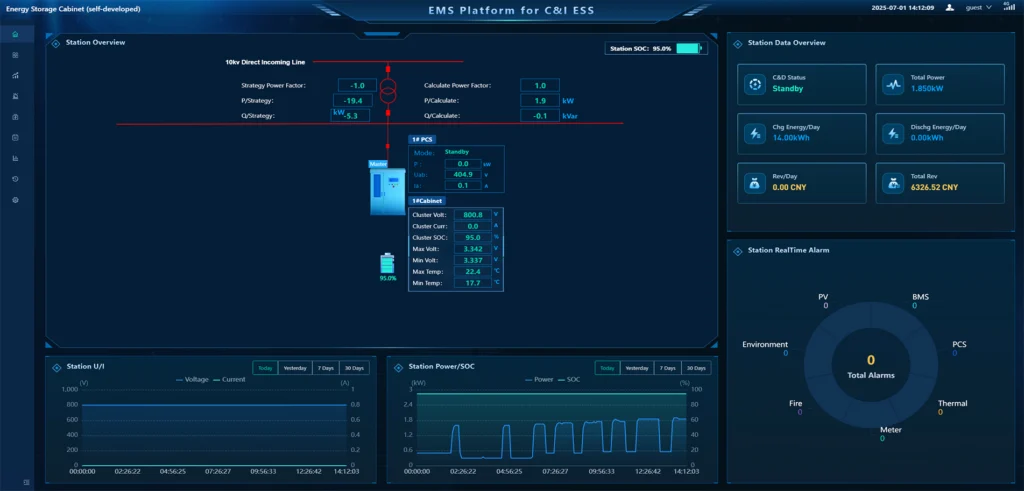
Apply a demo of Gerchamp’s Cloud Platform
 Gerchamp