In reality, within a UPS or energy storage system (ESS), the BMS serves as the ultimate “central brain” that ensures fail-safe operation. Its sole purpose is to keep critical operations 100% online. It captures the voltage, current and temperature data of the single cell all the time, while continuously testing the internal resistance for predictive maintenance. By accurately calculating the state of charge (SOC) and state of health (SOH), performing active or passive equalization, and millisecond overcharge protection, a reliable BMS can directly defuse those “invisible bombs” caused by battery degradation. caused by battery attenuation. It will work seamlessly with your DCIM or EMS system, replacing the previous extremely unreliable manual inspection with a 24/7 continuous automated monitoring/inspection. In the final analysis, this is the absolute line of defense to prevent thermal runaway and achieve zero downtime operation.
From the perspective of underlying logic, the most basic job of BMS is to translate the chemical reactions in the black box into digital indicators that we can understand and operate. This is the ultimate diagnostic tool for predictive maintenance.
SOC (State of Charge): This tells you exactly how much power is currently available. Once the power grid is cut off, SOC directly determines how many minutes your UPS can die before the diesel generator unit starts.
SOH (State of Health): It compares the current battery with a new battery cell to evaluate the remaining life. With SOH backing, you will know exactly whether the backup system can withstand the critical moment and bid farewell to the guesswork of replacing batteries based on instinct.
Engineers engaged in industrial and commercial (C & I) energy storage projects must understand this pain point: the overall capacity of a battery cluster is strictly limited by its weakest cell (the bucket effect). Because of manufacturing tolerances and the inherent temperature ladder inside the cabinet, the pace of cell charging and discharging is not consistent at all. How does BMS get to the bottom at this time? It depends on cell balancing.
No matter what infrastructure, security compliance is not negotiable red line. Some people always ask how much BMS plays in the safety level. In fact, it is the last circuit breaker to prevent catastrophic failure. Batteries, especially lithium-ion systems, are actually quite delicate and prone to accidents once they deviate from the safe working area. The BMS features strictly hard-coded internal thresholds. As long as it catches abnormal conditions such as temperature surge or voltage abnormality, it will immediately take over and trigger protection. For example, the BMS performs very harsh overcharge and overdischarge protection. Once the fault is confirmed, the BMS will directly trigger the built-in contactor to immediately disconnect the problematic battery cluster from the energy storage converter (PCS) or load on the physical circuit, isolating the danger in local areas. This fast fault capture and isolation is the most fundamental mechanism to prevent thermal runaway, and it is also the premise to ensure that your facilities can pass the most stringent fire acceptance and avoid the risk of catastrophic shutdown.
BMS is never an island; it must act as a team player in the entire ecological chain of the facility. Through Modbus RTU/TCP, CAN bus or SNMP, which are industry standard communication protocols, BMS pushes all its packaged summary data, alarm information and SOC/SOH indicators to the upper management platform. In the data center, BMS directly infeeds data into DCIM (Data Center Infrastructure Management) system, so that IT operation and maintenance personnel can see through the power health on a large screen. If in a microgrid or optical storage project, BMS has to keep real-time dialogue with EMS (Energy Management System) and inverter/PCS, coordinate with dynamic load demand, and coordinate scheduling when to charge from the power grid, when to discharge.
So back to the beginning, what is BMS doing? It is definitely not just a simple voltage reader. From the implementation of real-time data capture, internal resistance testing, to running battery cell equalization algorithm, preventing thermal runaway, a set of powerful BMS is the real invisible bodyguard of key power infrastructure. I often communicate with the person in charge of the computer room and the energy storage engineer. In this industrial BMS that cost money, you actually bought more than “monitoring equipment”. You are trying to completely eliminate the blind area of the system and completely turn the previous passive fire fighting that “broke and repaired” into predictive maintenance, thus ensuring that your business continuity is absolutely free from any interference.
Author: Kevin
I am a Senior Engineer at Gerchamp’s BMS R&D Department with over 12 years of industry experience. I specialize in leading the architecture design and core algorithm development for our advanced Battery Management Systems.
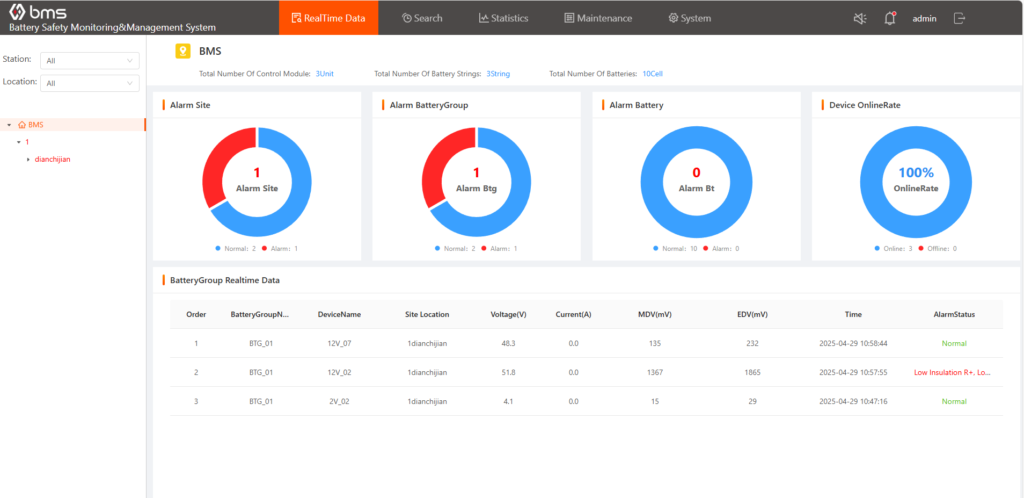
Apply a demo of Gerchamp’s Cloud Platform
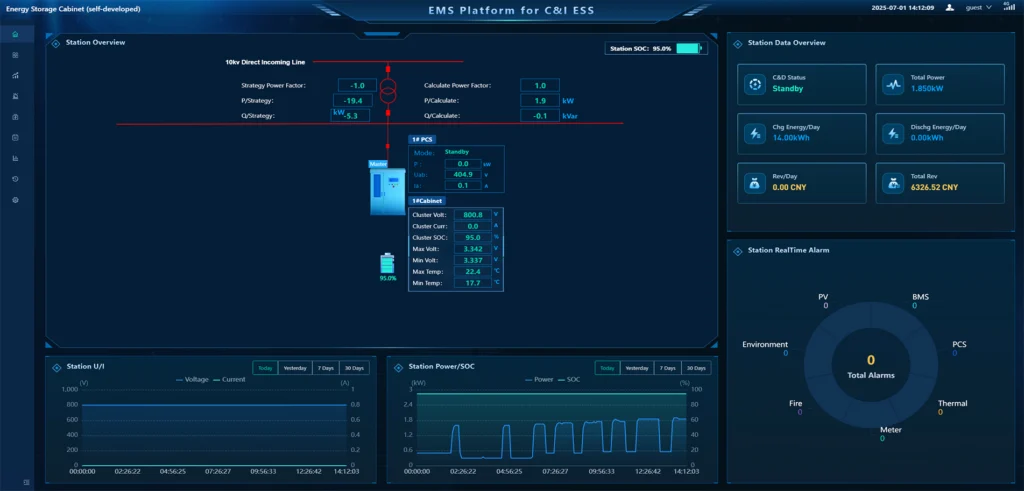
Apply a demo of Gerchamp’s Cloud Platform
 Gerchamp