Why Lead Acid Batteries Fail

Why Lead Acid Batteries Fail Lead Acid battery failure is never an instantaneous event, this failure is actually a long-term cumulative degradation process, mainly driven by three core factors: plate sulfation, grid corrosion, and electrolyte drying. If there is a lack of necessary maintenance and monitoring, coupled with improper charging strategies, high temperature environment or excessive deep discharge, these hidden electrochemical changes will quietly accumulate until the battery suddenly and completely strikes at a critical moment. Three Reasons Why Lead-Acid Batteries Fail Sulfide (Lead Sulfate Crystal Accumulation) This is the most common cause. When the battery is discharged, lead sulfate

Nickel Zinc Battery

Nickel Zinc Battery Contact For Offer Get a Quote Parameter nameDetailed Specifications (Prerequisites)Product Typenickel-zinc batteriesnominal voltage13.2 volts (1.65V * 8 cells)nominal capacity38Ah (1C discharge to 10.4V at 25°C)nominal power920W (30min rate/10.4V, 25°C)Mass energy density67.7 watt-hours per kilogramVolumetric energy density137.4 watt-hours per literStatic internal resistanceLess than 8 milliohmsFast charging rate1C (10°C~45°C)Standard discharge rate1C (-20°C~+55°C)Maximum discharge rate3C (-10°C~+55°C)Cycle life500 times (0.5C 100%DOD at 25°C)External dimensions225.5 * 122.5 * 142.5 mmShell materialV0 flame-retardant ABS engineering materialsCertification and StandardsUL9540A, RoHS, TTL, EU2023/1542 FAQ CONTACT US E-mail*NumberCountryNameYour QuestionSubmitting!Success!Submission failed! Please try again later!Email format error!Format error! Get a Quote Parameter nameDetailed Specifications (Prerequisites)Product Typenickel-zinc batteriesnominal

What Causes Sulfation In A Lead Acid Battery

What Causes Sulfation In A Lead Acid Battery The answer is very intuitive: long-term undercharge and keeping the battery of charge for a long time. When the battery is not completely filled, the normal amorphous lead sulfate on the plate will harden and become a dense, permanent crystal. This irreversible crystallization process will be further accelerated if it is superimposed on the lack of floating charge for a long time, extreme high temperature environment, or acid stratification within the electrolyte. This deterioration at the chemical level causes internal resistance to soar, capacity to plunge, and even the early retirement of

Importance Of Battery Management System

Importance Of Battery Management System The value of a battery management system (BMS) goes far beyond safety monitoring. From a project management perspective, it directly determines the return on investment (ROI) and is the line of defense to prevent the total cost of ownership (TCO) from getting out of control. A high-precision BMS is not just a component, it is the "brain" of the entire energy storage system. By accurately controlling the state of charge (SoC) and state of health (SoH) in real time, BMS can maintain the consistency of the entire battery pack. This active intervention can not only

Lead Acid Battery Monitoring System

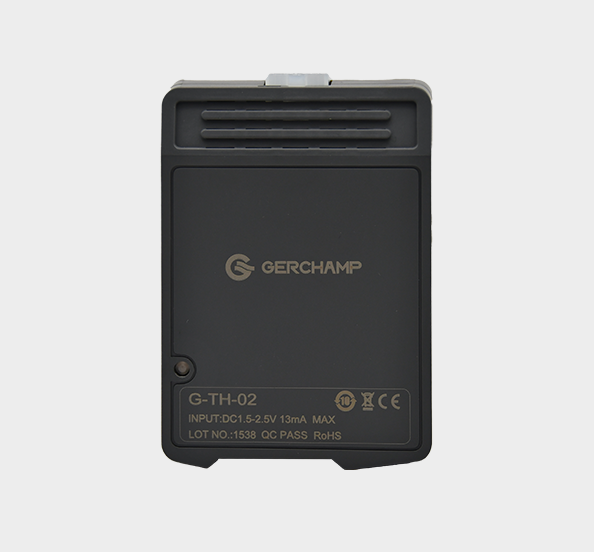
Lead Acid Battery Monitoring System Bulk Savings Available Get a Quote ProjectParameter NameParameter ValueOperating environmentOperating temperature-20 to +60°C; Altitude: 0 to 2000mOperating environmentRelative humidity5% to 95% (non-condensing)Reliability indicatorsAutomatic restart triggerBuilt-in WDT (Watchdog Timer)Reliability indicatorsMTBF100,000 hoursIndustry CertificationStandardsCE, REACH, UL, EN61010System performanceMax management scale6 strings, total 600 cellsCommunication interfaceSupport ProtocolMODBUS/RTU, TCP, SNMP protocolsMeasurement accuracyIndividual voltageCompatible with 1.2V, 2V, 6V, 12V; Error ±0.1%Measurement accuracyInternal resistance50 to 65535 μΩ; Repeatability error ±2%Measurement accuracyPole temperature-5 to +99.9°C; Error ±1°CPower consumptionG-TH series modulesFixed 3mA operating current (24h monitoring) FAQ CONTACT US E-mail*NumberCountryNameYour QuestionSubmitting!Success!Submission failed! Please try again later!Email format error!Format error! Get a Quote ProjectParameter NameParameter

What Does A BMS Do

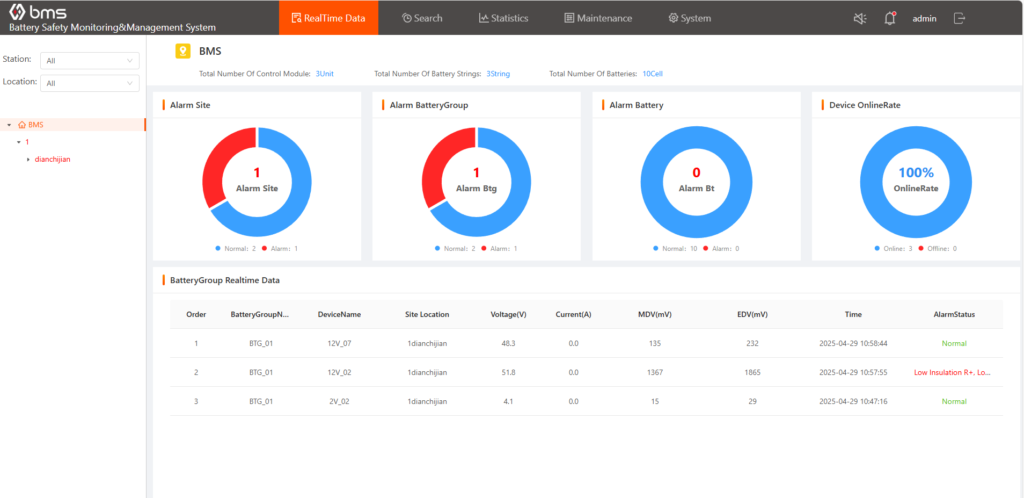
What Does A BMS Do In reality, within a UPS or energy storage system (ESS), the BMS serves as the ultimate “central brain” that ensures fail-safe operation. Its sole purpose is to keep critical operations 100% online. It captures the voltage, current and temperature data of the single cell all the time, while continuously testing the internal resistance for predictive maintenance. By accurately calculating the state of charge (SOC) and state of health (SOH), performing active or passive equalization, and millisecond overcharge protection, a reliable BMS can directly defuse those "invisible bombs" caused by battery degradation. caused by battery attenuation.

Is A BMS Necessary

Is A BMS Necessary The answer is yes, a BMS is definitely a necessity. For commercial energy storage systems (ESS) and data center UPS infrastructure, BMS has never been optional, but a key “digital immune system” to prevent catastrophic thermal runaway and fire . Without it, both lithium batteries and lead-acid batteries are extremely vulnerable to the fatal blow of overcharge, overdischarge and short circuit, resulting in rapid battery decay and even irreversible damage. By performing accurate active cell balancing and continuously monitoring SOC (state of charge) and SOH (state of health) in the background, a set of industrial BMS

Battery For Data Center

Battery For Data Center For modern hyperscale data centers and AI computing facilities, ensuring that the power supply never drops is a non-negotiable standard. However, optimizing your data center backup power strategy starts long before the equipment is installed—it begins with choosing the right battery chemical material. Facility managers are no longer just looking for a static passive “safety net.” As computing densities rise and rack power requirements surge, evaluating the fundamental chemistry of your Uninterruptible Power Supply (UPS)—Lead-Acid, Lithium-Ion, or Nickel-Zinc—has become the most critical strategic decision in data center design. Traditional Choice: Lead-Acid Battery For decades, lead-acid batteries

Telecommunications Battery Monitoring

Telecommunications Battery Monitoring To achieve truly effective telecom battery monitoring, operation and maintenance engineers must build a round-the-clock automated battery monitoring system (BMS). The core of this system must monitor three key indicators: internal resistance (IR), monomer voltage and temperature. Whether it is the traditional lead-acid battery or the current lithium iron phosphate (LiFePO4), through the central gateway to summarize the battery pack data, we can accurately calculate the battery’s state of health (SOH) and state of charge (SOC). This shift from “repair after accident” to “predictive maintenance” is the only way to ensure that 100 percent of the remote

Can You Overcharge A Lead Acid Battery

Can You Overcharge A Lead Acid Battery Yes, lead-acid batteries can be overcharged, once overcharge occurs, the consequences are often disastrous. When a lead-acid battery is exposed to a high float charge voltage for a long time, or the charge cycle is completely uncontrolled, the system will force current to it-even if it has actually reached 100 percent full charge. This excess energy will directly trigger the electrolysis of moisture inside the battery electrolyte, producing extremely flammable hydrogen and causing the battery to dry up quickly. The immediate danger is not just a sudden drop in battery health (SOH), irreversible

Battery Monitoring System For Lead Acid Battery

Battery Monitoring System For Lead Acid Battery For lead-acid battery assets, a professional battery monitoring system is not only an operation and maintenance tool, it is actually a key line of defense for automation in data centers and substations. Its core value is to completely transform the passive response mode of “broken and repaired” into predictive maintenance. Unlike traditional manual inspections-which, let’s be clear, are at best a “snapshot” at a certain point in time-a modern BMS can provide real-time monitoring of key health indicators. Here I refer specifically to the 3 core parameters: internal resistance (impedance), battery voltage, and

Data Center Battery Storage

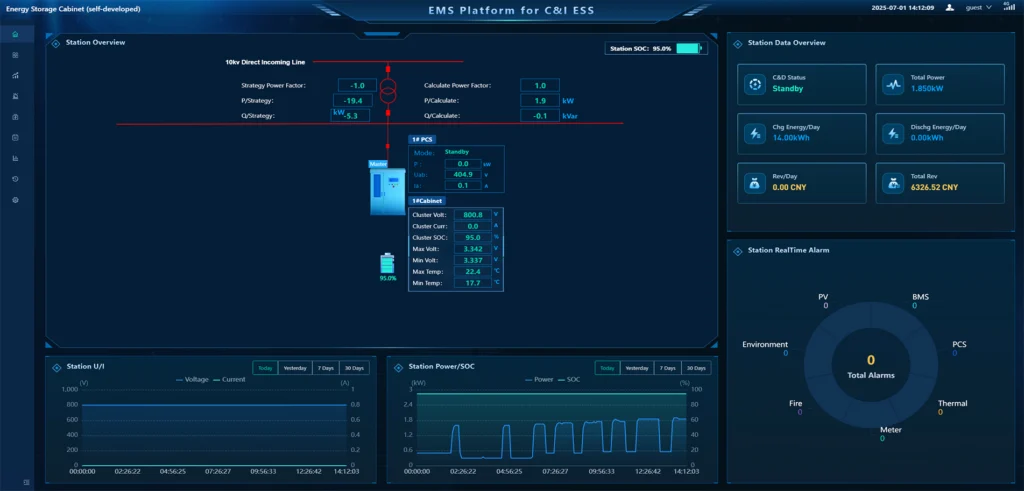
Data Center Battery Storage In recent years, when dealing with the key power system of the data center, I found that we actually have a core pain point in the battery energy storage strategy. The only way to completely eliminate unplanned downtime and reduce the total cost of ownership (TCO) is to change from passive maintenance of “break-fix” to a predictive “digital immune system”. Today’s hyperscale and high-density AI data centers simply cannot tolerate the monitoring blind spots in the previous backup power supply. You must first choose the right battery chemistry-whether it’s a space-saving lithium-ion (Li-ion), an inherently safe