UPS Battery Types Explained: Which One Keeps Your Data Center Running Safely?

UPS Battery Types Explained: Which One Keeps Your Data Center Running Safely? Every data center needs a UPS battery. When the grid fails, even for a few seconds, that battery is the only thing standing between normal operation and a costly shutdown. But not all UPS batteries are the same. The chemistry inside the battery box determines how safe, how reliable, and how expensive your backup power really is. If you are managing a data center, a colocation facility, or any mission‑critical environment, you have likely heard about three main UPS battery types: sealed lead‑acid (SLA), lithium‑ion (Li‑ion), and nickel‑zinc (NiZn).

Sealed Lead Acid Battery: Pros, Cons & amp; When to Upgrade

Sealed Lead Acid Battery: Pros, Cons & When to Upgrade Introduction The sealed lead acid battery is everywhere. You will find it in UPS units, emergency lights, security systems, and countless other backup power applications. It has been around for decades, and for one simple reason: it is inexpensive. But if you are running a data center, a critical facility, or any operation where downtime is not an option, you need to ask a hard question: is the sealed lead acid battery still good enough? Or are you keeping it simply because "it has always been used this way"? What Is

Power Backup Solutions

Power Backup Solutions The real reliable solution is not to buy a battery casually, but to integrate high-power density UPS, high-power Nickel-Zinc battery and intelligent battery management system. By deploying a battery monitoring system from Gerchamp with advanced monitoring technology, you can switch from the passive state of "reactive maintenance" to the "predictive and reliable" mode, ensuring that battery capacity and health are always at the best. Synergistic Effect Of UPS And High Rate Ni-Zn Technology The chemical composition of the battery directly determines the upper limit of the whole system. Traditional lead-acid batteries are often unable to cope with

Finance Industry Backup Power

Finance Industry Backup Power The ultimate solution to fix the finance industry backup power is actually very clear: a multi-level 2N redundant architecture must be built. At the heart of this architecture is the deep integration of high-performance uninterruptible power supplies, intelligent battery monitoring systems, and advanced high-rate discharge energy storage devices. In the face of the current high-intensity trading floors, the traditional VRLA lead-acid batteries are already a bit inadequate. This kind of scenario must give priority to Nickel-zinc batteries with 3C discharge, because its power density and thermal stability are indeed more advantageous. This comprehensive approach ensures "zero-second"

Data center battery backup system

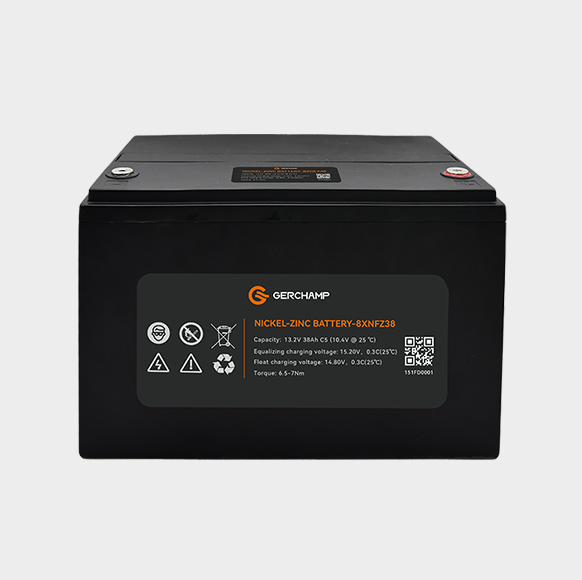
Get a Quote Technical Parameters8XNFZ38 Detailed SpecificationsRated Voltage13.2V (8 x 1.65V batteries)Nominal Capacity38Ah (1C discharge to 10.4V)Nominal Power920W (30-minute frequency)Product Weight7,800 ± 200gVolumetric Energy Density137.4 Wh/LInternal Resistance< 8mΩFast Charging Speed1C (10°C to 45°C)Maximum Discharge Rate3C (-10°C to 55°C)Shell Material GradeV0 flame-retardant ABSAuthoritative CertificationUL9540A, RoHS, TTL FAQ CONTACT US E-mail*NumberCountryNameYour QuestionSubmitting!Success!Submission failed! Please try again later!Email format error!Format error! Get a Quote Technical Parameters8XNFZ38 Detailed SpecificationsRated Voltage13.2V (8 x 1.65V batteries)Nominal Capacity38Ah (1C discharge to 10.4V)Nominal Power920W (30-minute frequency)Product Weight7,800 ± 200gVolumetric Energy Density137.4 Wh/LInternal Resistance< 8mΩFast Charging Speed1C (10°C to 45°C)Maximum Discharge Rate3C (-10°C to 55°C)Shell Material GradeV0 flame-retardant ABSAuthoritative

battery condition monitoring system

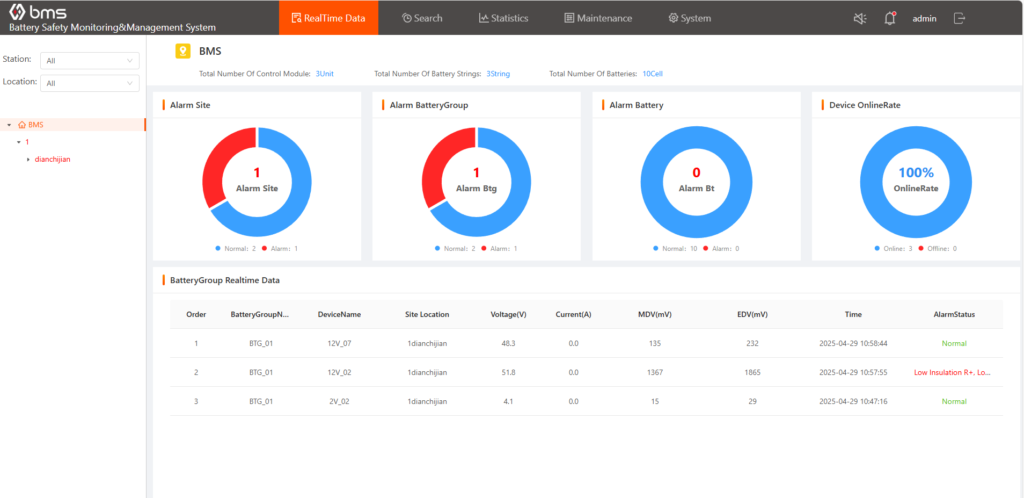
Get a Quote Parameter classificationParameter nameDetailed SpecificationsMonitoring objectsApplicable battery cells1.2V, 2V, 6V, 12V lead-acid batteriesMonitoring performanceIndividual voltage accuracy±0.1%Monitoring performanceInternal resistance repeatability±2% (50~65535μΩ)Monitoring performanceNegative post temperature accuracy±1°C (at 25°C)State predictionSOC/SOH accuracy±5% (under 1C discharge to 10.4V conditions)Electrical characteristicsStandby current3mAElectrical characteristicsOperating temperature-20 to +60°CCommunicationPhysical interfaceRS485, Ethernet port (LAN)SecurityCertificationCE, UL, REACH, RoHS FAQ CONTACT US E-mail*NumberCountryNameYour QuestionSubmitting!Success!Submission failed! Please try again later!Email format error!Format error! Get a Quote Parameter classificationParameter nameDetailed SpecificationsMonitoring objectsApplicable battery cells1.2V, 2V, 6V, 12V lead-acid batteriesMonitoring performanceIndividual voltage accuracy±0.1%Monitoring performanceInternal resistance repeatability±2% (50~65535μΩ)Monitoring performanceNegative post temperature accuracy±1°C (at 25°C)State predictionSOC/SOH accuracy±5% (under 1C discharge to 10.4V conditions)Electrical characteristicsStandby current3mAElectrical characteristicsOperating temperature-20 to +60°CCommunicationPhysical

Backup Power For Businesses

Backup Power For Businesses To truly avoid the catastrophic cost of downtime in an unpredictable power outage, companies must have access to a modern, intelligent backup power infrastructure. The most reliable final architecture solution at present relies on the synergy of a high-performance UPS control unit and a high-discharge-rate battery chemical composition, such as a Nickel-Zinc battery with 3C discharge. This particular configuration can instantly supply the huge surge current of heavy machinery and servers, ensure seamless power switching, and is inherently free from the high maintenance requirements and thermal runaway risks of traditional lead-acid batteries. The Fatal Flaws of

Backup Power For Telecom Infrastructure

Backup Power For Telecom Infrastructure To ensure uninterrupted connectivity of telecommunications infrastructure, the optimal solution is now well established: high-energy-density, safe, and sustainable battery systems. It’s Nickel-Zincc battery technology. Conventional lead-acid batteries are heavy and have a frustratingly short lifespan. While lithium-ion batteries offer high energy density, safety concerns regarding thermal runaway persist. In contrast, Nickel-Zinc batteries offer twice the battery density of conventional lead-acid batteries, a long design life, and inherently non-flammable safety. For those operators who are busy deploying high-density 5G macro and micro base stations, turning to Nickel-Zinc technology for reliable backup power is the solution: it

Data Center Backup Power Solutions

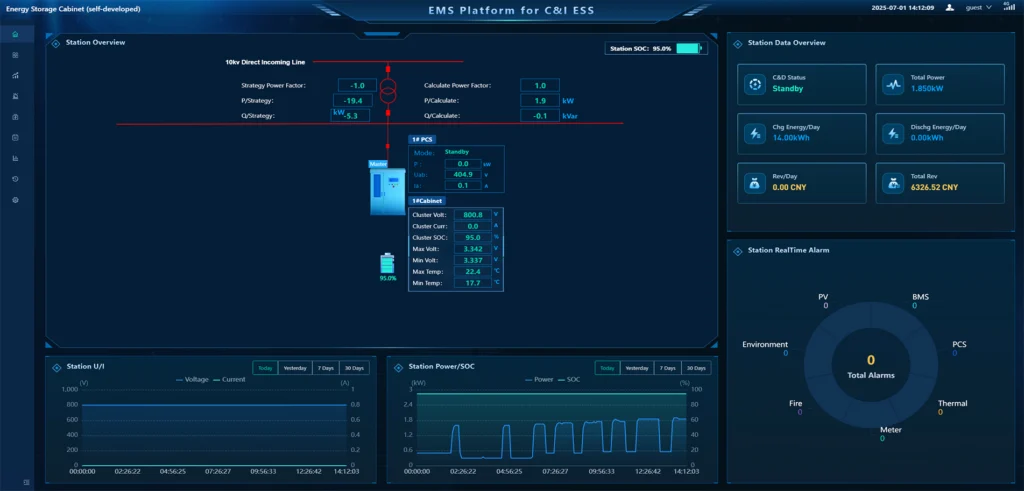
Data Center Backup Power Solutions If you’re still counting on those passive lead-acid battery systems, your high availability goals remain elusive. The current trend is to move to an integrated, active architecture; that is, to combine high-rate Nickel-Zinc batteries with intelligent battery management systems (BMS). The core advantage of this modern solution is the 3C discharge capability of the Nickel-Zinc technology. Within the same footprint, its power density is significantly higher than the traditional VRLA (valve-regulated lead-acid battery). More importantly, it significantly mitigates the risk of “thermal runaway” that is a headache in some lithium battery solutions. By monitoring SOH,

How To Calculate SOH Of Battery

How To Calculate SOH Of Battery When designing a BMS, if you want to accurately estimate SOH (State of Health), relying solely on basic arithmetic operations will not suffice; you need dynamic multi-parameter estimation. The industry-standard approach is to focus on two key metrics: capacity fade and increased internal resistance (IR). The basic capacity-based SOH formula is straightforward: SOHcapacity=(CactualCnominal)×100%SOH_{capacity}=\left(\frac{C_{actual}}{C_{nominal}}\right)\times100\% The SOH formula based on internal resistance is: SOHresistance=(REOL−RcurrentREOL−RBOL)×100%SOH_{resistance}=\left(\frac{R_{EOL}-R_{current}}{R_{EOL}-R_{BOL}}\right)\times100\% (where EOL stands for end of life and BOL for beginning of life). You can't measure these directly when the equipment is running. The current reliable BMS algorithm basically has to use

Substation Battery Monitor

Substation Battery Monitor The substation serves as the central nerve of the power system, and the backup battery pack is the last "safety card" in this system. Once the AC power supply fails, if these backup batteries fall off the chain, the circuit breaker cannot operate, the protection relay will be paralyzed instantly, and the whole substation will face a catastrophic power loss. Therefore, it is absolutely necessary to provide a reliable battery monitoring system (BMS) for the substation. At present, what the industry pays attention to is to build a set of "digital immune system" for the core facilities

How To Check The UPS Battery Condition

How To Check The UPS Battery Condition In hyperscale data centers that require extremely high reliability, it is very inadequate to judge the quality of UPS batteries by simply taking the voltage. Relying solely on voltage readings is deceptive, as it tends to mask the real chemical decay inside the battery. A complete battery health assessment must follow a “three-level diagnostic protocol”. Firstly, conduct a meticulous appearance inspection to see if the case is bulging, or if the terminals are leaking or corroded. Secondly, use a professional tester to accurately measure the internal resistance (IR), because for VRLA batteries, an
1 2 3 5